Stop the Slop: Why AI Writing Sucks

By David Griffin Brown and Michelle Barker
Apart from the widescale intellectual property theft that led to the creation of generative AI, there is a simple reason why your slop sucks: because it is devoid of humanity.
Yes, it’s much easier to churn out blog content now. It’s super quick for writing long algorithm-happy post descriptions on Instagram. You can fake it ‘til you make it with cover letters and grant applications. But in the end, there is one thing you’re not doing when you do all that: writing. It’s not you who’s doing the work, and it’s not you that you’re sharing with other people—which is supposed to be the whole point behind writing in the first place.
By using AI instead of creating on your own, you have swapped out process with product and made the product the only thing that’s important. This is completely contrary to authenticity. The process is the important part. Who you become while writing is the important part. The product, what you share with others, should be a culmination of the work you’ve done, not a shortcut to whatever it is you hope to gain: likes, money, publication, who knows?
But the problem doesn’t stop there: the slop is getting so ubiquitous that nuanced human thinking and voice seem to be disappearing. It’s everywhere now. We encounter it even in blogs that are supposed to be about creative writing. How ironic—and sad.
We just ran our eighth annual First Page Challenge contest. There’s nothing in our submission guidelines about AI. Up until this year, it hasn’t been necessary. But we’ll definitely be adding in a statement about it for future contests.
And yet, even if we do, will it stop people from chatting up their contest entry from scratch? Will it stop people from using AI to clean up their prose? Unlikely.
But we can still tell.
You can find guides online about how to remove AI “tells” from your writing, but this isn’t just about your use of the phrases “a testament to” and “that matters.” When generative AI is used to draft or edit fiction, the nuanced humanity disappears from the prose. There is a boring flatness to it that, as we encounter this monolithic bot-voice everywhere we look, becomes instantly recognizable.
Is it possible for an actual human to write just like Chatty? Sure. But that Chatty-sounding human isn’t likely to impress anyone, because what really captures us as readers is a distinct voice that can only belong to one person. That’s what Chatty erases.
There is a lot of talk right now about people getting unfairly accused of using AI. Agreed, it’s a minefield out there. Even if we were to drop a submission into ChatGPT or Claude or any of the other AI detectors, we wouldn’t likely get a definitive answer. So we’re not about to start accusing people who submit to our contests of chatting up their entries. But if we sense that grey plague of bot-voice, we will stop reading and move on.
One of the biggest tells isn’t diction or syntax (though they can both be pretty damning) but statements and scenarios and similes that almost make sense. On closer inspection, something falls apart or doesn’t add up. This issue is perhaps one that future incarnations of Chatty will be able to avoid, but will it ever be able to pull off a nuanced voice? We don’t think so. It doesn’t have a nuanced human perspective, so how could it?
Another tell is the constant reliance on abstractions, almost as if Chatty doesn’t quite understand what it means to be human. Quelle surprise.
We’ve had clients confess to using AI in their writing because it’s “better” than what they could do. Let us say this up front, right now: it isn’t. And again, it completely misses the point of what we’re supposed to be doing here, which is learning how to be better writers. How do you think you’ll get better if you keep outsourcing the hard parts to a machine? What will you learn, other than how to press a button?
One of the services we offer at the Darling Axe is beta reading. To find new beta readers, we scour gig websites for people with strong reviews, then hire them to read our own work as a test. More and more, we are having to demand a refund because these people—even with impeccable reviews!!—are just dropping the manuscript into an LLM and slopping out a report.
If we were to anonymously receive beta feedback from any of my go-to beta readers, we could tell you in a second who it was written by. Because we know their voice. Because their voice and approach and thinking are unique. That’s why we can also tell that a report—or a contest entry—is botted.
Chatty is indeed getting smarter, so it will no doubt get harder for us to spot the tells. We’re sure the cheats of the world will keep trying to get away with it. But for those writers who are more innocently turning to AI for assistance, even for a bit of line-level polish, please ask yourselves why. And please consider the bigger picture of what you’re doing, which is pruning away those parts of your brain you need to develop in order to get better at this craft.
The product is not the point. The point is a shared experience of humanity that can only be transmitted if both parties are in fact human.
Which makes your human essence more valuable than ever.

Michelle Barker is an award-winning author and poet. She is the co-author of two craft books: Immersion and Emotion: The Two Pillars of Storytelling and Story Skeleton: The Classics. Her fiction, non-fiction, and poetry have appeared in literary reviews worldwide. She has published three YA novels (one fantasy and two historical fiction), a historical picture book, and a chapbook of poetry. Michelle holds a BA in English literature (UBC) and an MFA in creative writing (UBC). Many of the writers she’s worked with have gone on to win publishing contracts and honours for their work. Michelle lives and writes in Vancouver, Canada.

David Griffin Brown is an award-winning short fiction writer and co-author of Immersion and Emotion: The Two Pillars of Storytelling and Story Skeleton: The Classics. He holds a BA in anthropology from UVic and an MFA in creative writing from UBC, and his writing has been published in literary magazines such as the Malahat Review and Grain. In 2022, he was the recipient of a New Artist grant from the Canada Council for the Arts. David founded Darling Axe Editing in 2018, and as part of his Book Broker interview series, he has compiled querying advice from over 100 literary agents. He lives in Victoria, Canada, on the traditional territory of the Songhees and Esquimalt Nations.

About the Darling Axe
Our editors are industry professionals and award-winning writers. We offer narrative development, editing, and coaching for every stage of your manuscript's journey to publication.



Related Posts
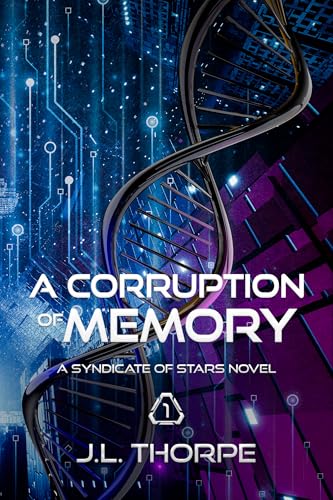
Congrats to J.L. Thorpe!

Sherlocked In: The Detective's Point of No Return