Book a webinar

Available upon request
Senior editors Michelle Barker and David Brown frequently co-present at conferences and via webinar. They are open to facilitating an existing topic or creating new material on a particular question or theme.
For more info, please get in touch: editors@darlingaxe.com.

Story Skeleton
This workshop leads participants in a structural breakdown of a few classic novels. It's essentially a book club for authors, where participants are split into groups to identify the plot points of a well-known story. This is followed by short group presentations to compare insights and craft highlights. Finally, we reveal our own breakdown for a comprehensive discussion.

The Intersection of Voice and POV
Our primary goal as authors is to draw readers into the world of our story, making them forget they’re reading a book. Voice and point of view are critical for creating an immersive experience. We’ll explore some definitions and discuss typical voice and POV problems authors might run into in their work and how they can self-correct.

The Protagonist's Problem
Every strong story grows from a clear protagonist goal and the pressure that challenges it. Participants analyze several well-known novels to identify the protagonist’s narrative goal, inciting incident, and climax. We discuss how these elements create a focused problem that drives the plot forward. Participants then work from goal prompts to infer possible inciting incidents and climaxes, sharpening their sense of cause and effect in story structure.

Anatomy of a Broken Query Letter
Agents read hundreds of queries each week, and small mistakes often bury a promising manuscript. Participants examine intentionally flawed query letters and diagnose the problems that weaken them, from vague stakes to misplaced focus. We discuss the elements that create a strong first impression: clear premise, compelling conflict, and concise voice. Participants then revise the queries to produce sharper, more effective pitches.

Talk Is Never Cheap
Dialogue carries tension, reveals character, and pushes a story forward. Participants begin by improvising short scenes built around opposing character goals. We examine where exchanges fall flat and where they generate friction. Participants then revise weak dialogue into conflict-rich interactions that sharpen character dynamics and move the plot. Writers leave with practical strategies for making every line of dialogue earn its place.

What Your Dev Editor Expects You to Screw Up
This presentation begins with an overview of what developmental editing involves and then we get into some of the most common narrative issues we encounter. This webinar can be adapted to focus on specifics by genre, especially fantasy, science fiction, YA, and memoir.

Beyond Good Enough: Revising Scene by Scene
The "Two Pillars" of storytelling are immersion and emotional draw. Immersion or immediacy refers to how deeply a story transports readers to another time and place. Emotional draw is the quality of a narrative that engages readers and keeps them turning pages. We'll break the two concepts down so you can apply these perspectives to your next revision.

Query Quest: The Hunt for Representation
Michelle and David help many clients polish their submissions, and they have interviewed more than 90 agents as part of the Book Broker blog series. Plus they themselves are both represented authors, which gives them a unique perspective on the art of catching an agent's attention. This presentation will cover everything you need to know about querying—and whether your manuscript has what it takes.

What Teens Want From YA Literature…And How We Can Give it to Them
What do YA readers really want and what are the tropes that make them cringe? In this interactive workshop, you’ll learn from two industry professionals who’ve dug into the disconnect between the YA novels being published and the novels teens actually want to read. They’ll discuss everything from unrealistic relationships to absentee parents, and writers will come away with a better understanding of how to write engagingly authentic YA novels.

Setting the Stage—World-Building for All Genres
In many novels, the setting is drawn from our known world. In the speculative genres, the setting is part of the fictionalization, and so spec authors have to devote much more time to defining and describing their fictional world. Non-spec authors can learn a lot from the world-building toolboxes of fantasy and science fiction. Setting is powerful and can be used to great emotional and symbolic effect, even if based on a location the author knows well.

Murder Your Darlings: A Webinar about Editing
Should you hire an editor? What do editors do for their clients? How do you find an editor who suits your style? What are the most common narrative issues encountered by fiction editors? These questions answered and more with a Q&A at the end for whatever else pops up along the way.
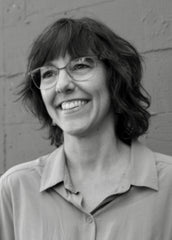
Michelle Barker’s most recent novel My Long List of Impossible Things (2020) is published by Annick Press and is shortlisted for a Vine Award. Her previous novel, The House of One Thousand Eyes (2018, Annick Press) won numerous awards, including the Amy Mathers Teen Book Award, and was named a Kirkus Best Book of the Year. She is also the author of A Year of Borrowed Men, finalist for the TD Canadian Children’s Literature Award. Her poetry, short fiction and non-fiction have been published in literary reviews around the world. Michelle is represented by Westwood Creative Artists and works as a senior editor with The Darling Axe. She holds an MFA in creative writing from UBC and lives in Vancouver, on the unceded traditional territories of the Musqueam, Squamish, and Tsleil-Waututh Nations.

David Brown founded Darling Axe Editing in 2018 after working as a freelance editor for more than fifteen years. He is an award-winning short fiction writer, recipient of a 2022 Canada Council for the Arts award, and his debut novel is represented by the Donaghy Literary Group. He has published poetry, fiction, and nonfiction in magazines and literary journals, and he has an MFA in creative writing from UBC. David lives in Victoria, Canada, on the traditional territory of the Esquimalt and Songhees Nations.