Too Good to Be True: Writer Scams Are Proliferating

By Michelle Barker and David Griffin Brown
You know the dictum: if something is too good to be true, it probably is. But we writers are all so hopeful, so when someone reaches out—by email, DM, or even a comment on our author page—and says they loved our work and want to feature us, or that our book deserves more promotion, we’re ready to believe it.
These scams come through every channel now. Below, we’ve listed the most common iterations. Knowing is half the battle.
If you haven’t received one of these yet, just wait: you will. The first one Michelle got was such a thrill she couldn’t believe it—in the sense of… Wow, I’m so lucky. And, Finally, someone noticed. And then she thought about it for ten seconds. Why would someone choose one of her novels out of the ether to promote it? Sure, she would love more attention for her work, but what’s the catch?
These scammers play on our deepest desires and potentially turn us into fools (and broke fools at that). And they’re rampant. Even though Michelle has never responded to a single one of these messages, she now gets about five a day: the promise of better exposure on Goodreads, an offer from big-name authors to connect and discuss the craft, people reaching out on Facebook to ask where they can buy my book.
David did respond just to see what would happen. Sure enough, it didn’t take long before the please send money message came through.
Some of the scammers don’t make much effort. Michelle has received several emails that open with “Hi Barker.” But a few days ago, she received one from the Toronto Public Library—or so they said. They claimed to be from one of the library’s book clubs and looked legitimate.
Turns out the Toronto Public Library has a huge selection of book clubs, so whoever set this up had done their homework. She wanted it to be true so badly, but she knew she had to do her due diligence, so she reached out to the library and sent them a screenshot of the email. Sure enough, it was another scam.
All of this is to say: be careful. Scammers now have AI to help them sound legit. Don’t fall for it! It’s hard enough to make money in this business. Don’t hand it over to someone who’s feeding on your accomplishments and manipulating your hopes and dreams. Before you click on anything, investigate. Look up names. Ask questions.
Unfortunately, even that might not be enough to protect you from getting fleeced. But the bottom line really involves common sense: if it seems too good to be true, it probably is.
Common Writer Scams and How They Work
Here are the most common schemes circulating in the wild:
1. Fake Book Club Invitations
Scammers send polished “book club invitations” that look like they come from real libraries or Goodreads groups. These book club scams praise your work in glowing, generic language, and claim their readers want to feature your novel. The hook lands when they ask for a hosting fee or a per-reader payment. A fake library book club email always reveals itself the moment money enters the conversation.
2. Paid Review Schemes
Someone promises a wave of Amazon or Goodreads reviews if you pay a “tip” per reviewer. These Goodreads review scams often use bot accounts or deliver nothing. Some vanish after collecting payment. Others risk your account by breaking platform rules around paid reviews. We have also heard of situations in which if you refuse to pay, the scammer blasts your book with one-star reviews.
3. Social Media or Email Impersonation (AKA Margaret Atwood wants to be your friend)
A well-known novelist (or even a successful midlist author) follows you, reaches out, and builds a warm back-and-forth. They start out friendly and encouraging. Then the pitch arrives: an introduction to their “marketing team.” These author impersonation scams thrive on Facebook, Instagram, Threads, X, and TikTok. (They can also be found to a lesser degree on Bluesky—at least for now.) A fake author outreach account often looks real at a glance, complete with profile pic and a banner image featuring their books.
4. Fake Literary Agents
Unsolicited messages from an “agent” can appear through email or social platforms. They say they discovered your book, want to represent it, and have connections to major publishers. The catch: you must pay for editing or evaluation before they “take you to the next stage.” A fake literary agent email usually sounds excited, supportive, and urgent. Any literary agency scam will lean hard on that urgency. A genuine agent earns money from selling your work, not from upfront fees.
5. Marketing and PR Boiler Rooms
Aggressive sales teams contact authors to offer “LA Times promotion,” “Netflix pitching,” or “Barnes & Noble placement.” Their sites look professional on the surface, but the work—if anything arrives—is low-quality or entirely fabricated. These author marketing scams and publishing services frauds rely on pressure tactics, limited-time offers, and promises no legitimate publicist would make. Once they have your payment, communication dries up or funnels into endless upsells.
6. Hollywood / Film Adaptation Scams
Your novel belongs on Netflix or HBO, and this scammer is going to help you get it there. They offer access to producers and film-rights departments. To get started, you must pay for screenplay development or “coverage.” These book-to-film adaptation scams lean on the dream of Hollywood interest. A Hollywood pitch scam thrives on speed and flattery: quick praise, big names, and a request for thousands of dollars.
7. Award and Contest Scams
A message arrives congratulating you for winning or placing in a competition you never entered. They invite you to purchase stickers, trophies, certificates, and “marketing bundles.” Many book award scams run dozens of categories to guarantee winners. A writing contest scam always revolves around fees and little-to-no transparency about judges or criteria.
8. Ghostwriting and Author-Branding Schemes
Ultra-cheap offers appear to ghostwrite your novel, build your brand, or “turn your idea into a bestseller.” If they deliver anything, you can bet your bottom dollar it will be AI slop. These ghostwriting scams and author branding frauds sell speed and instant success.
9. Amazon Phishing and Account-Takeover
You receive a notice warning that your royalty payments are frozen or your KDP account is suspended. The link directs you to a look-alike login page. These KDP phishing emails attempt to steal credentials or banking information. A fake Amazon author scam often mimics the tone of real support messages, right down to colour schemes and formatting.
10. Fake Conferences, Workshops, and Mentorships
Invitations promise access to bestselling authors, top agents, or industry insiders. Once you pay, the event either never occurs or delivers nothing advertised. These writing conference scams and fake author mentorships target writers who crave community and feedback.
11. The Podcast Interview Scam
You get a message from a “popular Spotify podcast” saying they want to feature you, your book, or your business. The caller sounds professional. They book a time, count you in, and run a quick, oddly thin interview. Everything feels legitimate until they reach out again to say your episode “performed extremely well” and now they want to move you into a paid promotion package. These fake podcast interview scams create urgency around “listener numbers,” “expanded reach,” and “premium placement.” A real show never charges guests to appear.
12. Vanity Publishers Disguised as Traditional or Hybrid Presses
Some companies present themselves as selective presses while operating as pay-to-play operations. They use AI-generated websites, stolen staff photos, and inflated claims about distribution. These vanity publisher scams and fake hybrid press schemes charge thousands for formatting, generic covers, and weak marketing packages. Their goal, naturally, is to get money from you. As for your book’s future? They couldn’t care less.
Keep Your Eyes Open
New scams come along every day. Have you seen one that isn’t mentioned on this list? Please share some details in the comments.

Michelle Barker is an award-winning author and poet. She is the co-author of two craft books: Immersion and Emotion: The Two Pillars of Storytelling and Story Skeleton: The Classics. Her fiction, non-fiction, and poetry have appeared in literary reviews worldwide. She has published three YA novels (one fantasy and two historical fiction), a historical picture book, and a chapbook of poetry. Michelle holds a BA in English literature (UBC) and an MFA in creative writing (UBC). Many of the writers she’s worked with have gone on to win publishing contracts and honours for their work. Michelle lives and writes in Vancouver, Canada.

David Griffin Brown is an award-winning short fiction writer and co-author of Immersion and Emotion: The Two Pillars of Storytelling and Story Skeleton: The Classics. He holds a BA in anthropology from UVic and an MFA in creative writing from UBC, and his writing has been published in literary magazines such as the Malahat Review and Grain. In 2022, he was the recipient of a New Artist grant from the Canada Council for the Arts. David founded Darling Axe Editing in 2018, and as part of his Book Broker interview series, he has compiled querying advice from over 100 literary agents. He lives in Victoria, Canada, on the traditional territory of the Songhees and Esquimalt Nations.

About the Darling Axe
Our editors are industry professionals and award-winning writers. We offer narrative development, editing, and coaching for every stage of your manuscript's journey to publication.



Related Posts

The Detective’s Trinity: Means, Motive, and Opportunity
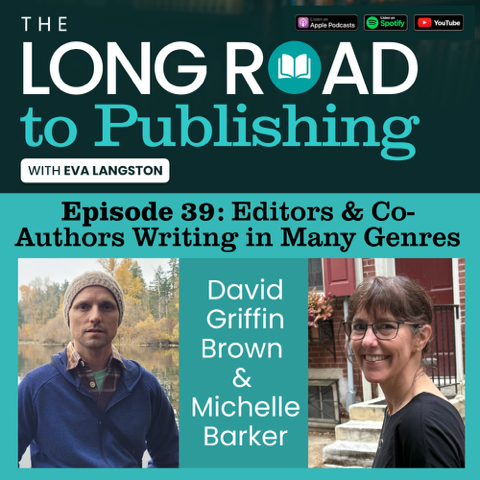
The Darling Axe on The Long Road to Publishing podcast

You forgot witting and reading platforms, evern the popular ones are a waste of time as the readers have nich genras that they want and that’s it. Others have perdatory TOS that should send writers running away screaming. It’s realy important to read the TOS. Don’t ignore it.
Hey, folks,
I’m glad you’re addressing this issue. For about five years I’d get two calls a week from a variety of these shysters. I finally found the way to get rid of them was the simple reply to their offer, “Send me a cheque; then we’ll talk.”
One woman, seemingly truly bewildered, asked, “Why would we send YOU a cheque?” Perhaps she thought her company was really offering something.
Another answer was, “Alan Lehmann? No, he’s not here. He won a lottery, pretty big sum, and he’s on a long trip around the world. I’ll leave him the message that you called.” Click.
A lot of wasted time, but interesting to find out how many of these approaches there are out there. There’s a whole industry devoted to screwing people, and it’s not porn (at least in these cases).
Have a good year, you people.
Special ‘hi’ to Michelle.
Al